An emotion you hide, that you sweep under the rug, doesn’t disappear. It comes back later, almost always at the worst moment.
Eleven at night. A message arrives from a client: “Can we talk tomorrow?” Nothing more.
By ten past eleven you have already reviewed the last three weeks of work, found the mistake you surely made, drafted an apology in your head and imagined the end of the contract. You sleep badly.
In the morning, she wants to add a second project.
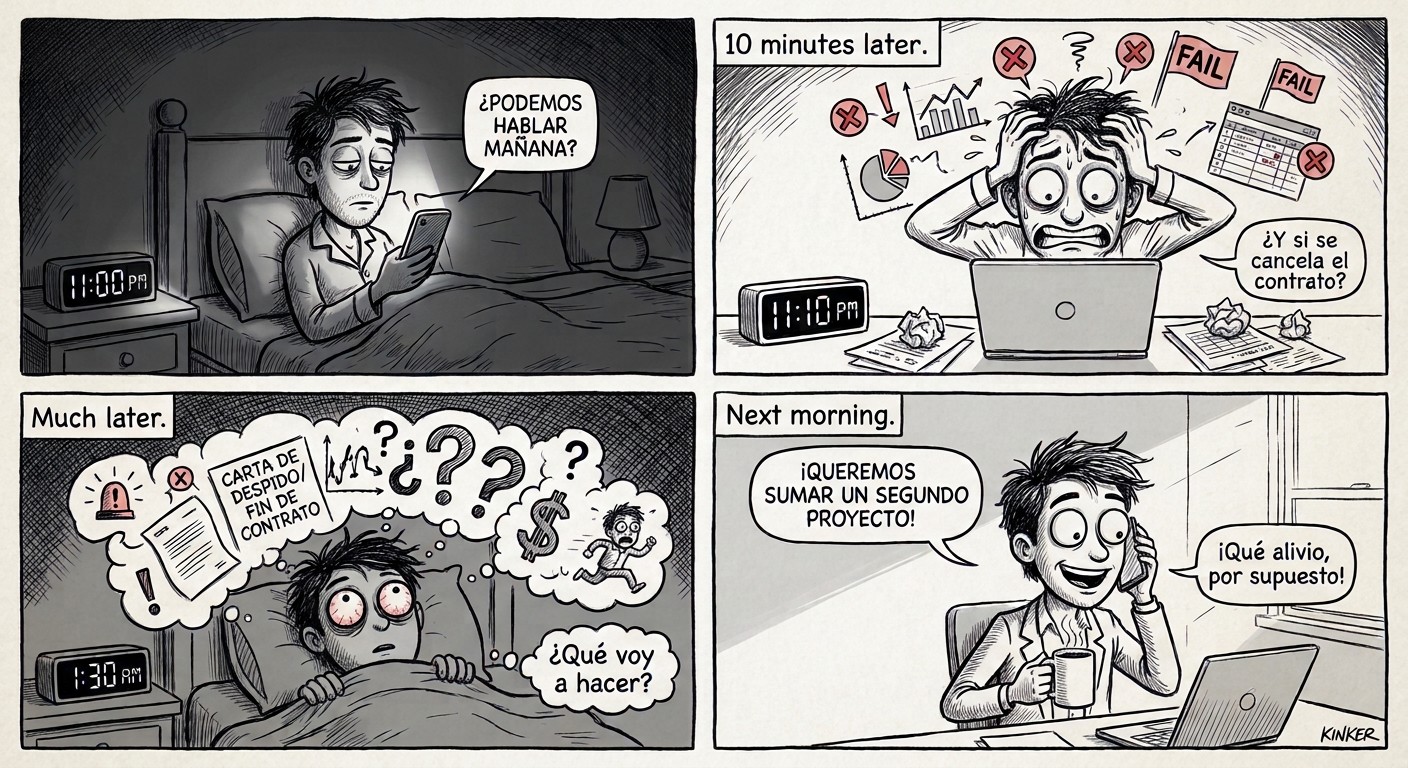
Illustration: AI-generated
Tired people ignore their emotions: they have no time or energy for them. They smile, they postpone them, and a postponed emotion gains strength. Keeping it hidden costs more than reading it would have.
If we split the word: e-motion, energy in motion. It comes from the Latin emovere, to move outward. Emotions are energy that carries information:
- Fear warns that something may be at risk.
- Anger says that something needs protection or change.
- Envy points to something you value and feel is out of reach.
- Jealousy points to something you value and fear losing.
When you don’t read them, when you hide them, they pile up like sediment. That’s why sometimes someone “blew up without a fuse”: it didn’t take a big spark. When there is a lot built up, any spark, however small, stirs everything up. It’s worth reading them as information, not fearing them.

Where does an emotion’s power come from? From the sediment, from what you’ve been ignoring for a while, and from the distance between what you expected and what you believe is happening, more than from the event itself. We spend the day imagining what could be: planning, hoping, worrying. That’s what imagination is for: without it we couldn’t prepare for anything. But without an anchor in what actually happened, it also rehearses dangers that don’t exist and losses that haven’t occurred. The eleven o’clock message had three words. Everything else was added by whoever read it.
An intense emotion can change your interpretations and take you into a state of alert. It’s worth checking before acting.
Before the questions, breathe: slowly, in and out through the nose, several times. Breathing doesn’t suppress the emotion; it takes you to a calm place from which to read it.
Three questions to check it:
- Real or imagined? Does this feeling respond to what happened, to what is happening, or to what I imagine is going to happen?
- What did I expect? Name the expectation the event didn’t meet.
- What did I need or want? That is usually the underlying message.
For the eleven o’clock client, the answers would be: imagined; I expected silence to mean approval; I needed to know my work is valued. With that written down, there is nothing left to rehearse, and something useful to do in the morning.
Emotions behave like water. When they can move, they take you somewhere. When they are dammed up, they pile up, and over time they can break rocks. Reading the information is giving the emotion a way through: it gets processed and the energy moves again.
Which imagined future are you living in?
Choose an emotion you tend to put off “for later”. Ask yourself the three questions once this week. If you’d like company in reading it, that is what a clarity session is for.
This story is fictional.