Illustration: AI-generated
Illustration: AI-generated
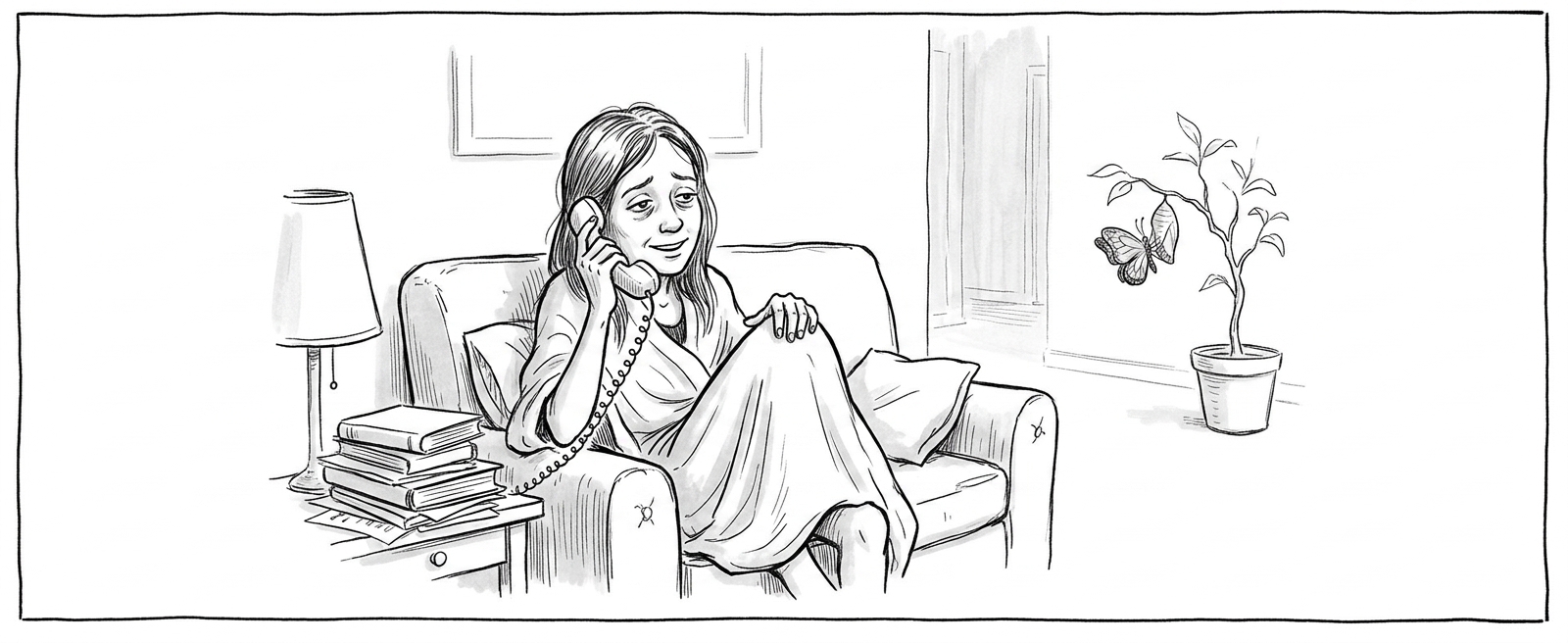
Julie was always there for her friends. It was her natural way of being: as the older sister in a family whose parents worked long hours, she'd learned early on to be the support for her younger siblings, and now she was that for her friends too.
So it felt normal to talk to Nora almost every day, ever since her relationship hit rock bottom, giving her at least half an hour each time.
"She needs me," Julie would tell herself when Nora's name lit up the screen. And so the situation continued for about half a year.
We like being available for our friends. Friendship matters; it's part of what lets us thrive. But it also needs to be handled with care.
"No one wants to listen to me anymore," Nora said one evening. "You're my best friend." Those words struck a nerve in Julie. She remembered the story of the butterfly: the child who watches a butterfly struggling to get out of its cocoon and, wanting to help, gently widens the opening. The butterfly gets out easily, but its wings never gain the strength they need to fly. It was precisely the struggle to get out that would have built that strength.
Julie realised her constant availability might be stopping Nora from making the decisions she needed to make. And she herself had become part of the cycle too, putting her own life on hold with every call.
Being constantly available can quietly do two things at once: it can remove the pressure the other person feels to actually make a decision, and at the same time, it lets you avoid facing parts of your own life you'd rather not look at, since there's always someone who needs you more urgently.
A gentler way to put it might be: "I do want to be there for you; I have fifteen minutes right now. Tell me the essentials, and we'll pick it up tomorrow." Or, even more honestly: "I've noticed we talk about this every single day, and we seem to be going in circles. Maybe someone who specialises in this could help you more than I can?"
Notice where you stand when you offer your support to others: they have their own responsibilities too. Their feelings are real, but it's not automatically yours to carry until it's resolved. It's worth naming, especially if your work involves holding space for other people: whether you're a parent, a friend, a coach, a mentor, or a supervisor.
Look closely at where that impulse to keep giving comes from... and also look at what it lets you avoid facing.
This is exactly what supervision and coaching exist for: to address this pattern, and other automatic ones, that put our lives on pause.
Whether through life coaching or supervision, this is exactly the kind of pattern these sessions exist to explore.