Same family, same street, same first drink. One of them stops. The other can’t.
Two brothers, two years apart. Same parents, same school, same friends at the same parties. At forty, one has a glass of wine at weddings. The other has been to treatment twice. At family gatherings their mother looks from one to the other, and the question she never says aloud is: what did I do differently?
It is the question almost every family asks, and it usually has a hidden second half: whose fault is it? The research gives a kinder and more useful answer than blame. There is no single cause. Risk stacks up from several directions at once.
What we inherit. There is no “addiction gene”. Many genes each add a little risk, and some lower it. Across large groups, roughly half of the difference in who develops an addiction is linked to genes. That figure describes populations. It cannot say how much of one person’s story is genetic.
What happened to us. The more kinds of adversity a child lives through, the higher the later risk. Even so, many people with very hard childhoods never develop an addiction.
When it started. People who begin drinking before fifteen are about four times as likely to become dependent as those who start at twenty-one. The brain is still developing into the mid-twenties.
Where we are. Many American soldiers used heroin in Vietnam, and about one in five showed signs of dependence. Back home, in a different environment, only a small fraction returned to it in the first year. Surroundings matter far more than we tend to think.
Genes are like the keys of a piano. We are born with them, and they do not change. Epigenetics is about how the piano is played. Experience leaves marks on the keys that make some easier to press and others harder, without changing the keys themselves. Stress and adversity can leave those marks, and so can sleep, food, movement, calm and safe people. Some marks can change again over time, which is why recovery can change more than behaviour.

Illustration: AI-generated
The other half of the picture is protection: belonging, a sense of purpose, skills for handling feelings, a community. Two brothers can share a home and still differ in every one of these. One had a teacher who noticed him. One started a year earlier. One was more anxious from the day he was born.
Risk explains. It does not excuse, and it does not condemn. Nobody chose their starting point, and that includes parents. What can be chosen now is what gets built.
So what can stack the odds in their favour now? Much of what raised the risk can work the other way. People: friends who don’t drink or use, a sponsor, a support group, a family that listens. Places and surroundings: fewer of the old haunts and the old crowd, and a home that feels calm and safe, with regular sleep and meals. Interests and activities that fill the hours the substance used to take: sport, music, learning something new, volunteering, work that means something. And the tools they learned in rehab: processing emotions, getting to the root cause, recognising triggers, journaling, meditating, rewriting their story, calling someone before acting on a craving, a plan for the hard days. No single one is a guarantee. Together they tilt the odds, and each one is something that can be built.
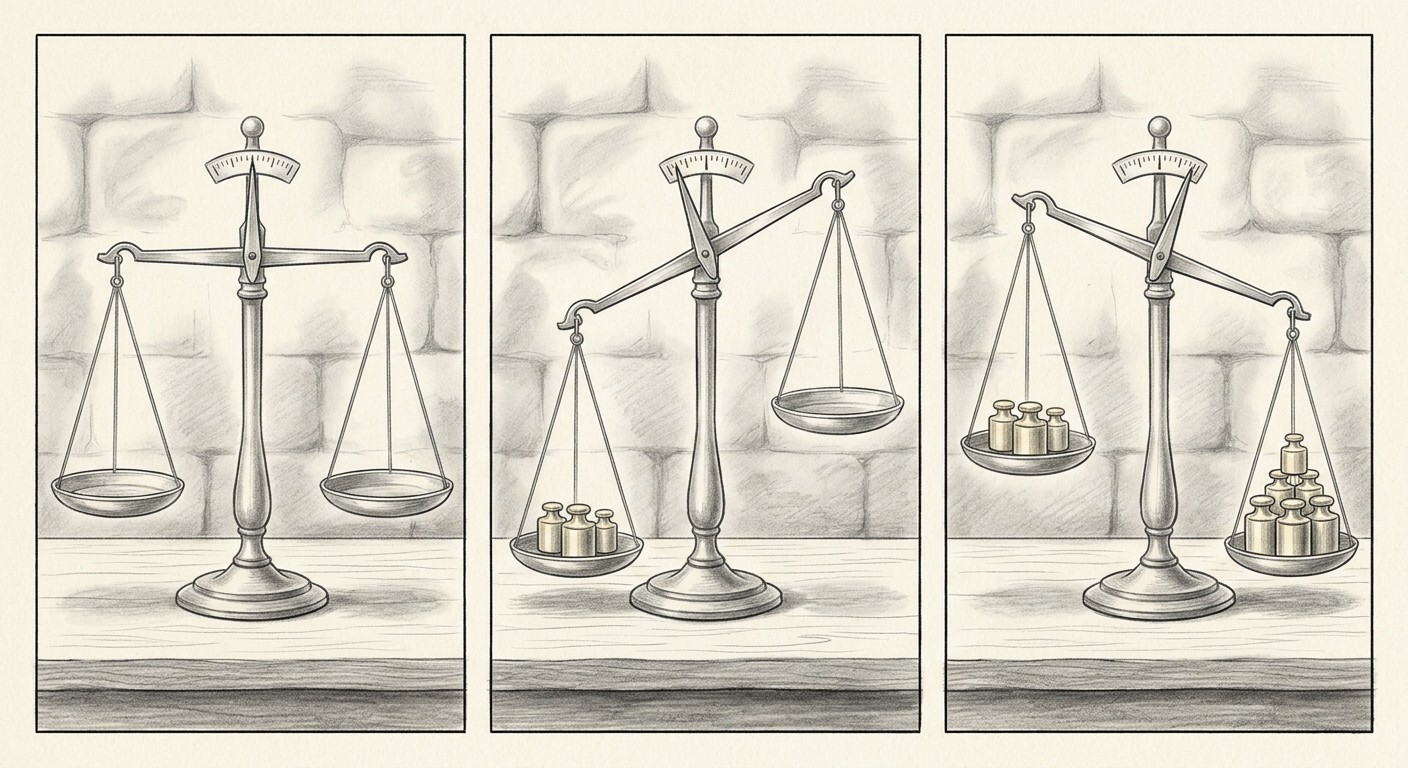
Illustration: AI-generated
What protected them, even then?
Most families can list what went wrong. Try the other list: one person, one place or one skill that protected the person you love, even in the worst years. Then ask which of those you could help strengthen this month.
If this touches something heavy, talk to someone you trust: a counsellor, a family support group, a good friend. You don’t have to carry it alone either.
Sources: the CDC-Kaiser ACE Study; Grant and Dawson (1997) on age of first drink; Lee Robins’ studies of Vietnam veterans; Ducci and Goldman (2012) on genetics. This story is fictional.