We picture hope as waiting. The kind that keeps people sober picks up the telephone.
May 1935, a hotel lobby in Akron, Ohio. A stockbroker called Bill Wilson, five months sober, has just watched a business deal collapse. He is alone in a strange city. On one side of the lobby is the bar. On the other is a telephone.
He walks to the telephone and keeps calling until someone puts him in touch with another man who drinks too much, a surgeon. They talk for hours. That conversation led to Alcoholics Anonymous.
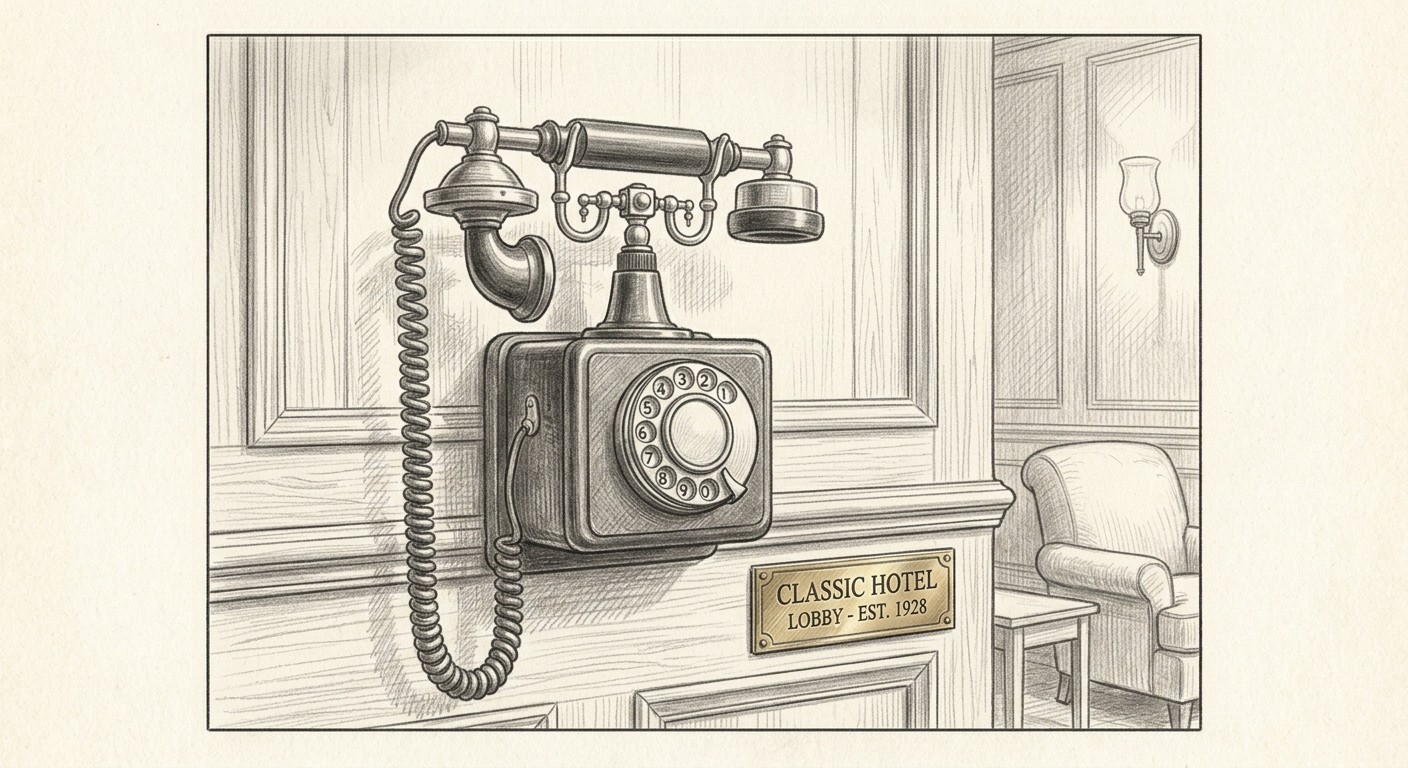
Illustration: AI-generated
Look at what he had in that lobby. He had no confidence, and the plan had just failed. He had no certainty that the call would help. He had one belief, that talking to someone in the same position might work, and he acted on it within minutes. If he had stayed in the armchair believing it, the evening would have ended at the bar.
The second of the Twelve Steps is about coming to believe that something beyond one’s own willpower can help. It is easy to read that as sitting back. I read it the other way. The belief opens a door, and the person still has to get up and walk through it.
Andreas Krafft, who studies hope at the University of St. Gallen, describes a kind of hope that says “things can change for the better, even if I don’t know how yet”. It needs no plan, so it is still there when plans have failed. And when his team asked what goes together with hope, nearly every answer was something people do: helping others, meaningful work, good relationships, time in nature.
Admiral James Stockdale, a prisoner of war for more than seven years, saw the passive version fail. The men who said “we’ll be out by Christmas” waited, Christmas passed, and it broke them. Those who lasted believed they would come through in the end, and then did what each day required.
This is what I insist on with the people I work with. Their objective is their future self, safe and sound. Hope will not be delivered to them. They build it: a call made, a meeting attended, a walk taken, a hand offered to someone else.
Families have a passive version too: watching, counting days, waiting to see whether it holds. Your own hope is yours to build in the same way, whatever they do. It also turns out that what gives people hope and what they hope for are often the same things, such as connection, meaning and being useful. Working on one builds the other.
What will you do with your hope today?
Make two short lists: what gives me hope, and what I hope for. Circle what appears in both. Then put one action in your diary for each day this week: a walk, a call, a visit, one small act of help.
If this touches something heavy, talk to someone you trust: a counsellor, a family support group, a good friend. You don’t have to carry it alone either.
Sources: Andreas Krafft, Hope Barometer, University of St. Gallen (general public, not people in recovery); Jim Collins (2001) on James Stockdale.